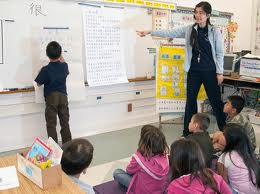
Why Chinese is Easy to Learn
15 Reasons Why Learning Chinese Is Easier Than English
It’s (almost) as easy as 一,二,三.
Reprinted from www.miparentscouncil.org
1. Mandarin does not give a damn about tenses.

There are none!
2. The alphabet is totally phonetic.

It’s called Pinyin and it makes the ABCs look pretty lame.
3. It doesn’t have that many combinations of sounds.

As opposed to thousands in English.
4. Mandarin ain’t got no time for too many syllables.

The majority of words only have one or two syllables.
5. You can usually understand people even if you can’t make out the tones.

Tones = inflections. You can still figure out what people are saying through context.
6. You could even just learn spoken Chinese with Pinyin and be illiterate.

If you want a quicker route. (Note: NOT promoting illiteracy here, just sayin…)

8. Nouns don’t have plurals.

Nouns do have “units” that you have to remember, but kiss those -es’s goodbye.
9. OR genders.

There are gendered pronouns (like he/she), but that’s about it. China thinks that pineapple should have a choice whether it’s male or female.
10. All sentence patterns are fixed.

Subject + time + location + verb + object all day every day.
11. Vocabulary makes more sense.


12. Mandarin and Cantonese characters are written the same.

Killing two birds with one stone AMIRITE?
13. Numbers are used wayyyy more effectively and efficiently.

Months, for example, are just number + word for month. So January is 1 month, February is 2 month, etc.
14. You don’t necessarily have to worry about dealing with different dialects.

Though people will talk smack behind your back if you don’t speak Cantonese in Hong Kong or Hakka in a Hakka neighborhood, almost everyone understands Mandarin.
15. Some words actually look like the thing they describe.

It’s kind of like reading a picture book. Ish. Which is always cool.
Convinced? Check out some free online Mandarin tutorials here.
 Mid-autumn Festival, or Chinese Moon Festival, is a festival for people who love to admire the full moon, while the moon on this day is the fullest and largest to the eye. The whole family gather together, feasting in good wine, fruits, nuts and cakes.The festival falls on the fifteenth day of the eighth month on the Chinese lunar calendar, which is usually in September or early October of the Gregorian calendar. As in most ethnic holidays, there are legends to honor. The most popular legend for the Mid-autumn Festival is traced to the year 2000 B.C. This is the story of Hou Yih, an officer of the imperial guards. One day, ten suns suddenly appeared in the sky. The emperor, greatly perturbed and fearful that this occurrence presaged some great evil to his people, ordered Hou Yih, an expert archer, to shoot nine of the suns out of the sky. The great skills with which Hou Yih accomplished this feat impressed the Goddess of the Western Heaven.Since Hou Yih was also a talented architect, the Goddess commissioned him to build her a palace made of multicolored jade. His work so pleased the Goddess that she rewarded him with the possibility of everlasting life. She gave him the elixir of immortality in the form of a pill. He was not to swallow the pill until he had undergone a year of prayer and fasting. Hou took the pill home and hid it.Hou’s wife was a divinely beautiful woman named Chang Oh. One day she discovered the hidden pill and she swallowed it. The resulting punishment was immediate and Chang Oh found herself airborne, bound for eternal banishment on the moon. As she soared upwards, her husband, Hou Yih, desperately tried to follow but was swept back to earth by a typhoon. Chang Oh’s divine beauty enhanced the brilliance of the moon with her own radiance. Now, Chinese people gather each Moon Festival to admire her.